Raised Bed Gardening or Elevated Dirt

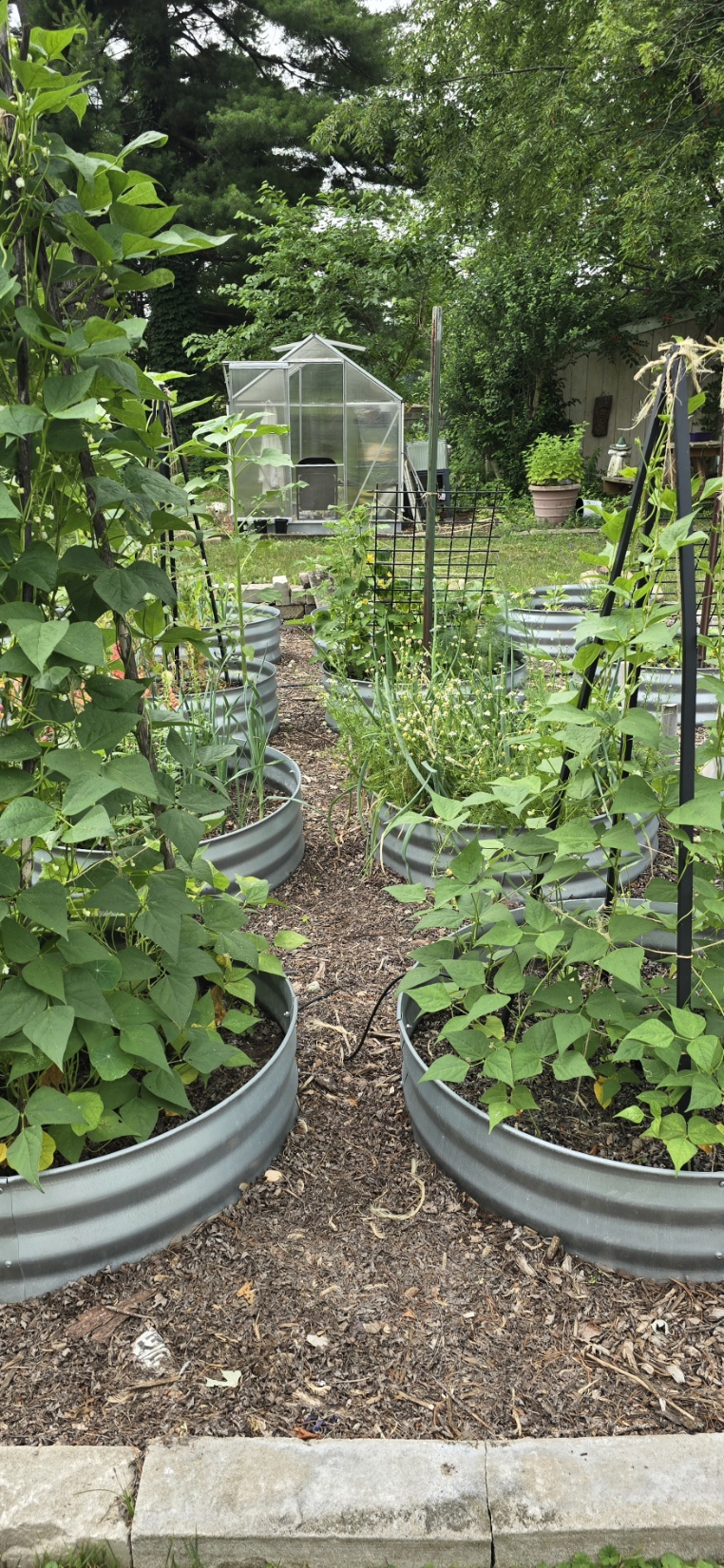
My backyard garden consists of raised beds made from 3-foot round, galvanized steel fire pits. I saw them on sale three years ago at Rural King for $49.99 each, so I bought 16 of them. I do not regret this purchase.
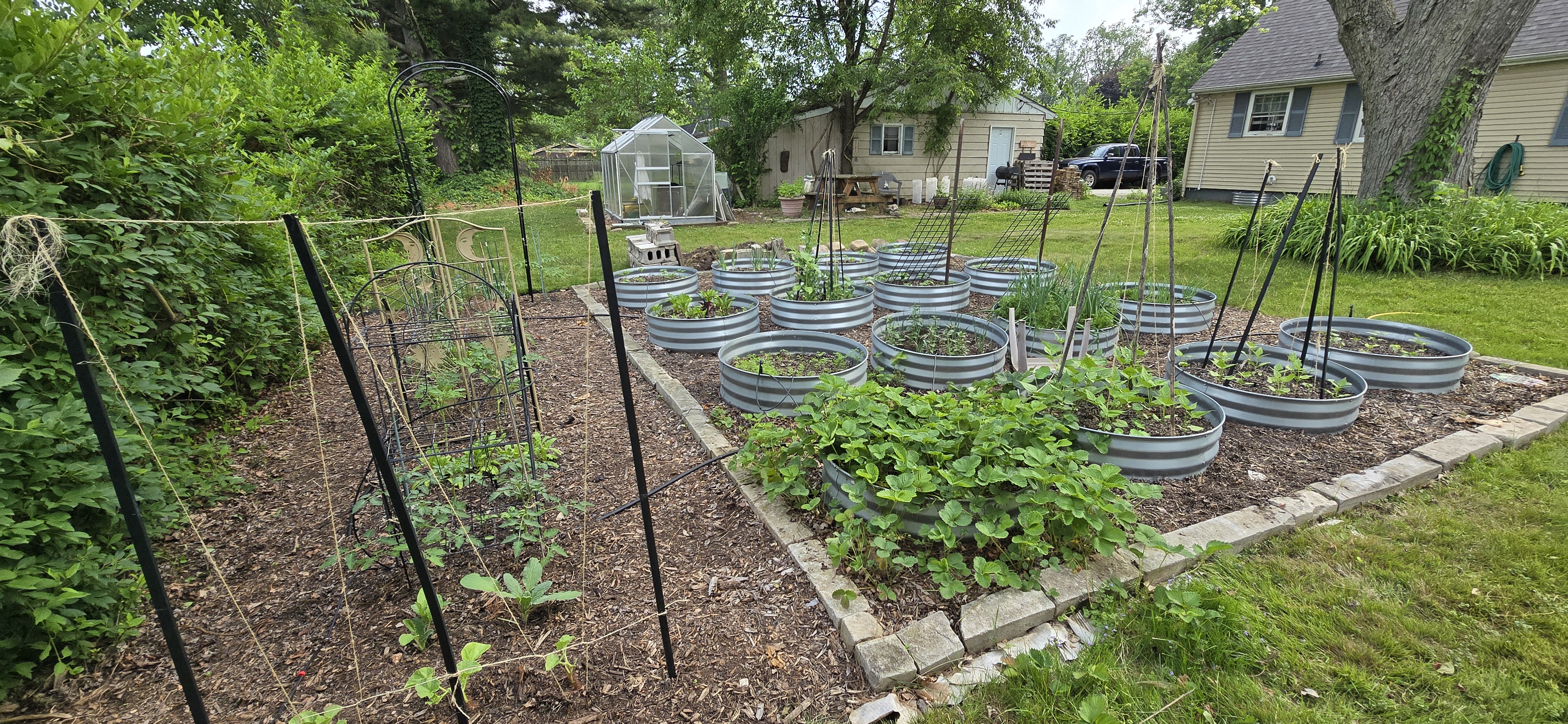
Full photo of backyard raised garden bed with vegetables.
Late May 2025

Many moons ago, I had a traditional in-ground garden, but it filled with weeds quickly and I just could not keep up. Curse you, crab grass!!! I decided to tarp the whole area over late summer into early spring in order to suppress the weeds and start over the next season. Then COVID hit. Unlike many people, when we were all sequestered at home, I had less freedom to go outside in the yard since I was the main caretaker of my disabled son. Not being able to continue our “normal” public lives meant his services ended and I took care of him inside the house.

a photo of raised garden beds containing carrots, chives, leeks, snapdragons, onions, chamomile
Early June 2025

From inside the kitchen, I could look out at the garden space and dream of beautiful, lush green vegetables instead of the ugly, huge, blue tarp that was spread out collecting falling debris from the maple trees. Various stones and bits of cement block held down that awful thing. It was a true eye-sore. However, two years later when I was finally able to get back to gardening, the tarp had done a wonderful job of killing off the weeds. I was able to position the fire pits into the base of what is now our backyard raised bed garden.

I am very happy that I have mostly chosen to go this route as opposed to the traditional in-ground method. The soil in the raised beds is easier to amend based on what I’m planting in it that season as I can curate the acidity levels or organic fertilizer. I don’t have to be careful where I am walking for fear of accidentally stepping on a plant I want to live. Plus, weeding is much easier! Oh, my goodness, is it much easier. I can grab a stool, sit down, and weed. Since these beds are 3 feet in diameter, I can pretty much reach around the whole thing without hurting my back from bending over or being on my knees.
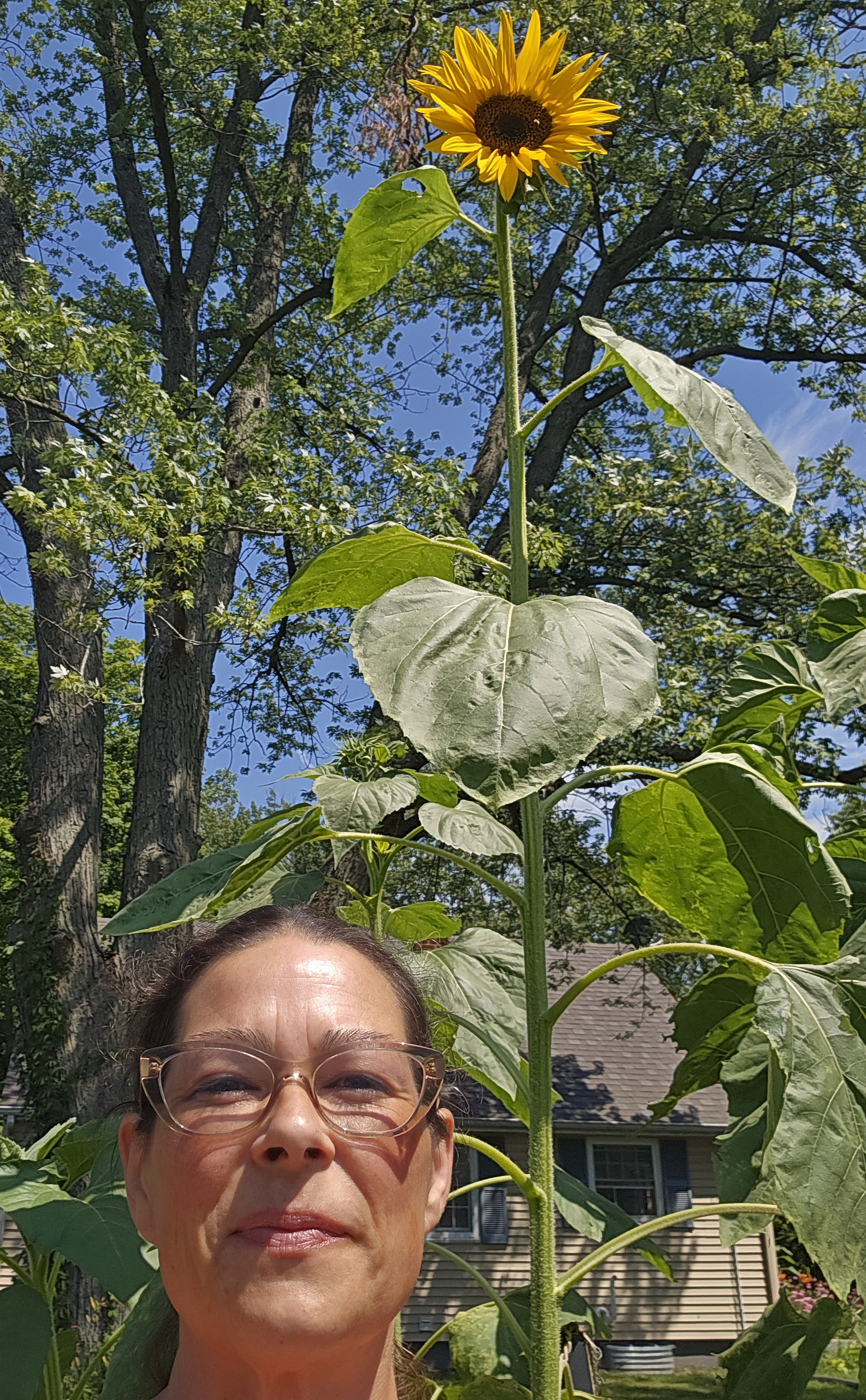
photo of happy 48-year-old gardener, woman who is 5'9" tall standing in front of a 7' tall sunflower in full bloom

Also, raised beds do help deter some pests and critters from getting into the plants. I said “some” like, the really lazy ones. Not the squirrels. They are not lazy; however, they are forgetful. The neighbors have a couple of black walnut trees. I keep finding walnut saplings trying to grow in the beds. I pull them out (often with most of the nut hull still attached), throw it towards the squirrel’s home and shake my fist! Yes, I actually do this.

Every season I get to know how to garden a little better. Raised garden beds have been so helpful and have made gardening easier for me. I also think they look beautiful. Although it may seem weird that placing 16 galvanized steel fire pits, filled with dirt, in a backyard could elevate its look.

In my case, it certainly did.
Affiliate Program https://glowhigh.com/?aff=113

Bushy, Tall, and Green is How I Like My Bean

They’re not just beans; they’re garden-bragging rights!

Since I started a garden, I’ve always added pole beans. They have never failed me. I have grown them up a fence, straight from the ground with make-shift support systems, and in containers, like the time I grew some around an old broomstick handle in a large pot. This last method didn’t work out very well. The bean vines basically just twisted around each other, got very heavy, and weighed down the broomstick handle resulting in a twisted, sprawling mess on the ground. #dnr

I’ve had a raised garden bed system for three years now and each season beans have occupied at least two beds. This year, they are growing in three beds – and for the first time ever – I am growing bush beans, too.

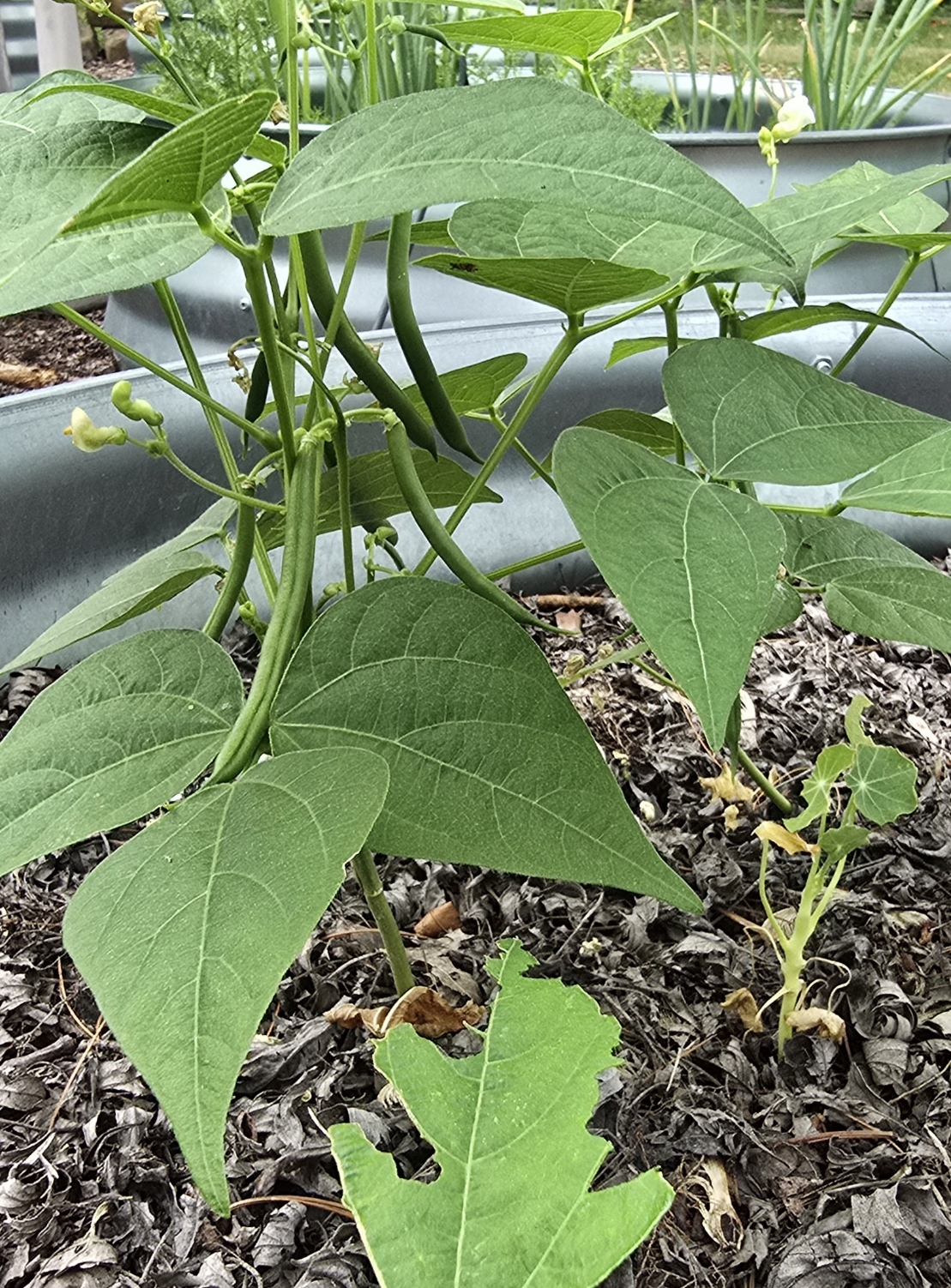
Bush beans "Seychelle" growing in a raised garden bed in northern Indiana zone 6a

Bush beans don’t climb and don’t need support systems like pole beans do. It’s pretty easy to ascertain that information from their respective names. Kinda like, duh, that’s simple. I like simple.

The type of bush bean I decided to grow this year is a variety called “Red Tail.” I read good things. Other people must’ve read good things, too, because they were on backorder for about a month. Good thing I order my seeds early, like, in February, because what else am I going to do in February in northern Indiana except dream about warmer growing weather whilst perusing seed catalogs and dreaming of bountiful harvests?!

Honestly though, I’m not all that impressed with these beans. Yield has been meh. The flavor is meh. Growing them has been frustrating.

The bugs, however, absolutely LOVE them!!! As you can see from the photo, things are being munchy-munched a bunchy-bunch! Three plants were pulled at the beginning of the season and replaced with direct-sown seeds. I also have to spray the base of the plants with soapy water every-other-day in order to keep the pests away (mainly spider mites and aphids). However, I have been getting beans to harvest. My method has been working and I now have (collectively amongst all of the beds) enough beans to make a side dish for dinner. Yay!

In case you didn’t know, pole beans are climbers! For supports, I reused stalks from the giant sunflowers that grew in this bed last year. In the yard, I allow sunflowers (and other flowers) go to seed, so the local bird population has another option for yummy snackage during the winter. Not every bird can afford to vacay in the tropics during the cold season!

Anyway, I formed a teepee structure, tied the tops together with jute twine, then strung some of that jute horizontally around the supports. You can’t see any of that in this photo, because the pole beans have totally encapsulated the jute string. You’ll just have to believe me.

This old, ahem “dog,” has learned a good trick, though. I learned this trick after the whole broomstick falling over from the weight of the twisting bean vines and sprawling all over the ground fiasco. This trick keeps the vine from falling over and growing back down around itself. Here it is…

When the bean vine gets to the top of the support, just pinch it off. Yup. That’s it. Duh, that’s simple. I like simple.

I hope if you garden that you plant yourself some beans of either variety, bush or pole, in order to enjoy fresh green beans.

I will try bush beans again next year. Perhaps, a different variety and I think I’ll plant them closer together. Right now, though, I’m preferring the pole beans. Some of us just need a pole and a little encouragement, I guess.

Thanks for reading! I plan on having weekly blogs and beginning a photo-laden weekly newsletter! Please, subscribe to both. I’d appreciate it.

This has bean fun. Until next thyme!